MecWash: Enhanced Production with MecWash MWX400 System

HellermannTyton is a global leader in cable management solutions, supplying high-performance products to the aerospace, automotive and electrical sectors. At its Plymouth facility, the company manufactures heat-shrinkable tubing and related components. These products require precise cleaning processes to maintain their integrity, as excessive heat during cleaning could cause premature shrinkage and render the components unusable.

Maintaining strict quality standards while meeting rising production demand prompted HellermannTyton to seek increased cleaning system capacity. However, the cleaning challenge was tough:

  1. Temperature Sensitivity – Heat-shrinkable tubing must never exceed 38°C during cleaning and drying.
  2. Contaminant Removal – Silicone residue, notoriously difficult to remove, needed to be consistently eliminated to guarantee product performance and quality.

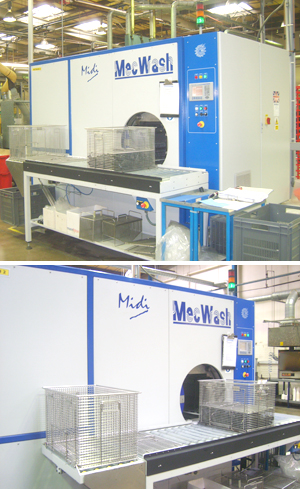
HellermannTyton had already invested in a MecWash Midi system, which had proven reliable over time. However, increasing production volumes required an additional system capable of meeting both the technical requirements of sensitive heat-shrinkable parts and the operational demand for 24/7 production.
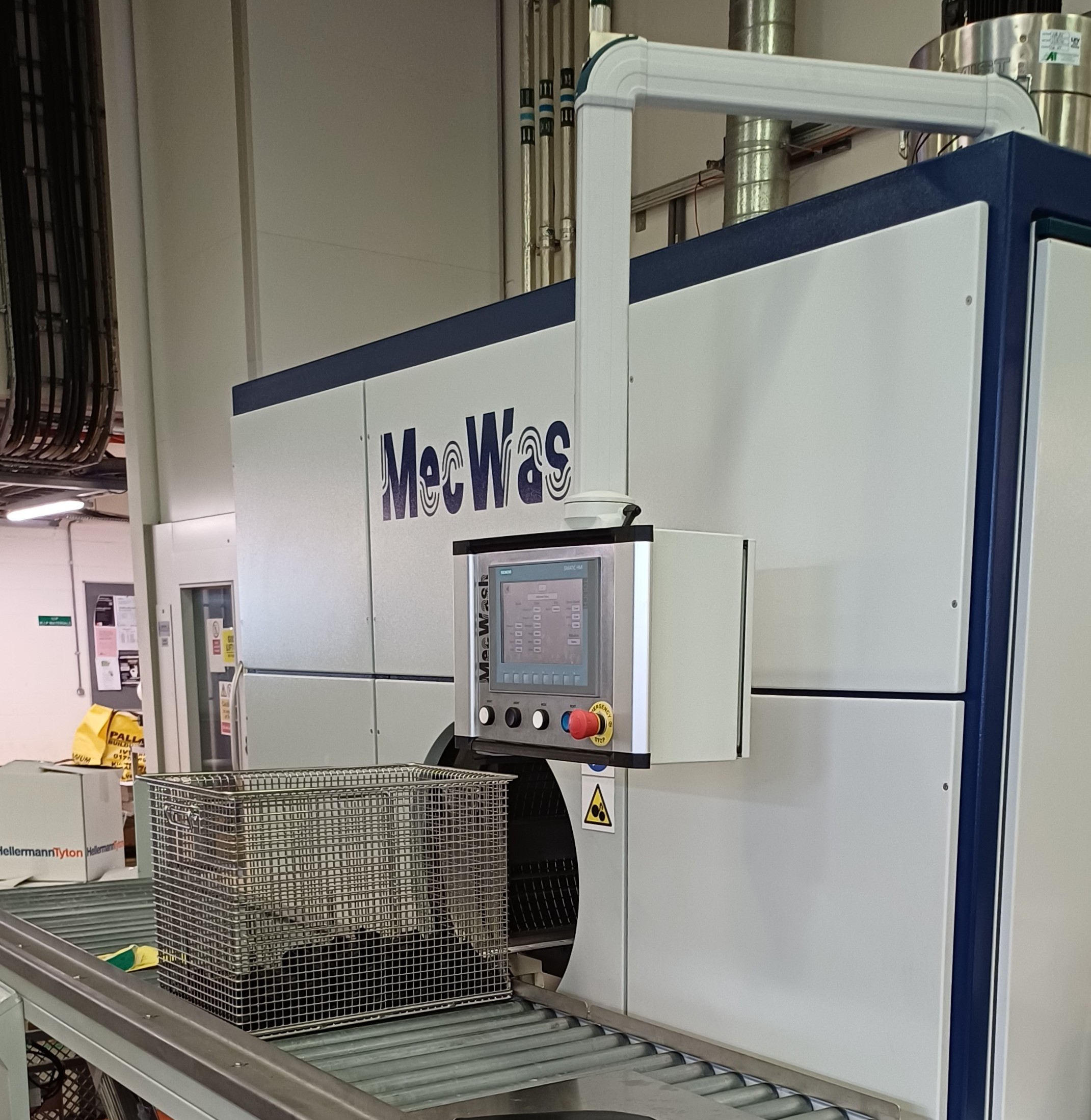
The MWX400 is the second parts washing system built by MecWash for HellermannTyton. 

After consulting with MecWash Systems, HellermannTyton installed the MecWash MWX400, a precision aqueous parts-cleaning system specifically designed for complex cleaning applications and sensitive materials.

The MWX400 offered three critical advantages:

  • Ultrasonic Cleaning – Dislodges and removes stubborn silicone contamination.
  • Specialist Cleaning Chemistry (MecWash AC33) – A formula developed for plastics that ensures excellent cleaning results without damaging delicate components.
  • Low-Temperature Drying – Maintains precise control to keep parts below the 38°C threshold.

This bespoke solution was developed in close collaboration between MecWash sales manager Paul Jarratt and the HellermannTyton team to ensure all process requirements were met.

“Maintaining product integrity is critical at HellermannTyton. The MWX400 provides ultrasonic cleaning, designed to target, dislodge and remove stubborn silicone deposits, while its low-temperature drying ensures the heat-shrinkable parts remain within safe thermal limits.”
— Paul Jarratt, Sales Manager, MecWash Systems
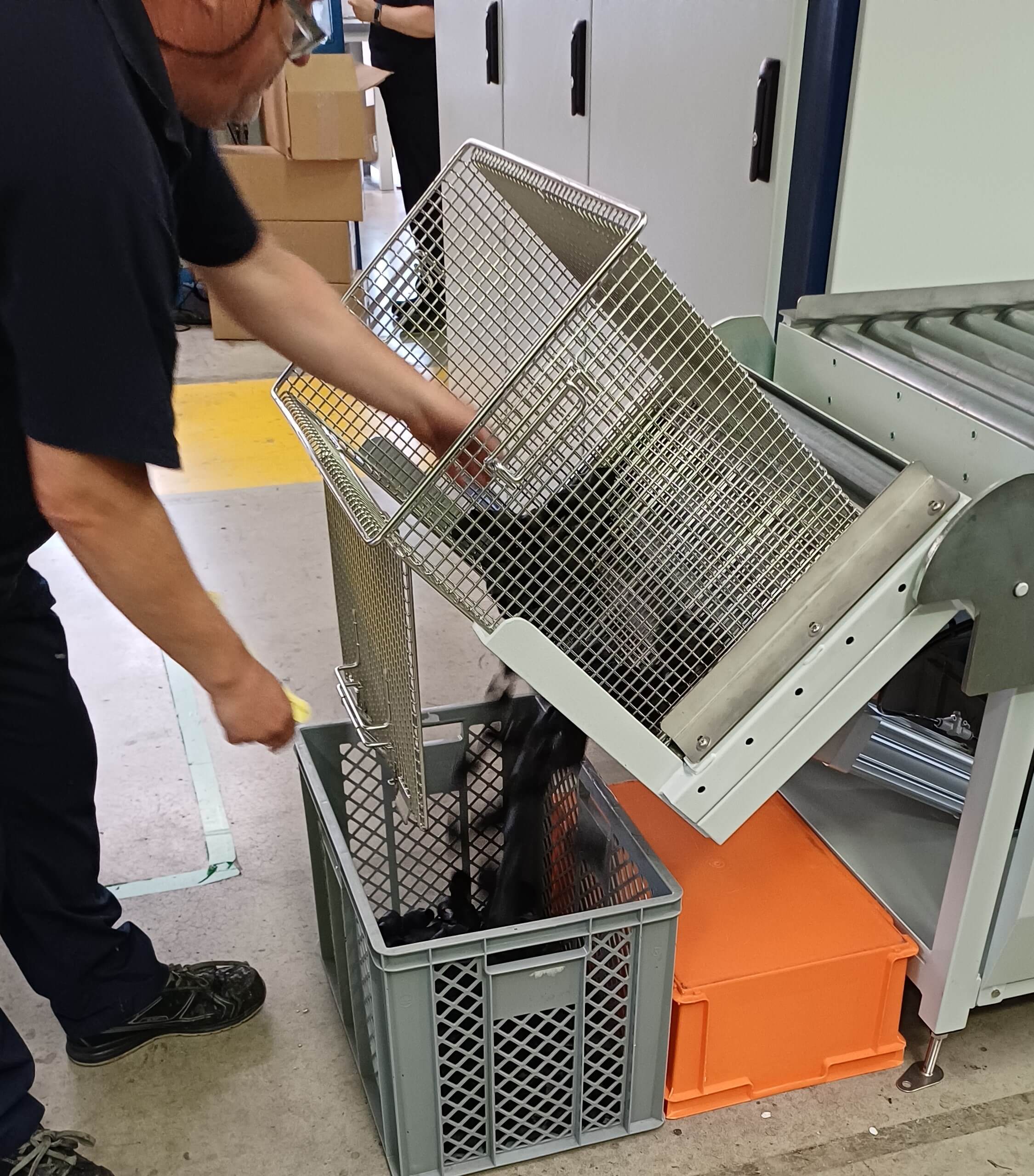
The MecWash MWX400 provides a complete removal of silicone residues while protecting the delicate components.

The introduction of the MWX400 delivered significant benefits to HellermannTyton’s operations:

  • Increased Production Capability – The system enables continuous, around-the-clock operation (24/7), scaling production without compromising quality.
  • Consistent Quality – Ultrasonic cleaning combined with MecWash AC33 ensures complete removal of silicone residues while protecting delicate components.
  • Proven Reliability – This is HellermannTyton’s second MecWash system, underlining its confidence in MecWash technology and support.

“The MWX400 allows us to clean and dry heat-shrinkable components at the precise temperature needed to maintain quality, while removing even the most stubborn silicone residues. It has increased our production capacity and runs reliably 24/7.”
— Steve Walker, Continuous Improvement Engineer, HellermannTyton

MecWash has over three decades of experience in advanced aqueous cleaning solutions, serving industries such as automotive, aerospace, hydraulics, and medical. The company’s systems are designed to handle the most stringent manufacturing demands, with robust engineering that ensures longevity.

“Building a second parts washing system for HellermannTyton is another example of the repeat business MecWash enjoys. The combination of the Midi and MWX400 has generated substantial improvements to the efficiency of their cleaning process. With proper maintenance, these systems will continue to deliver reliable performance for years to come.”
— John Pattison, Managing Director, MecWash Systems

By adopting the MecWash MWX400, HellermannTyton has strengthened its production capability, ensuring both quality and scalability in its cable management solutions. The partnership underscores MecWash’s ability to tailor precision cleaning systems for critical applications where consistency, reliability, and product integrity are paramount.


KNOLL Case Study: Bosch Power Solutions, Homburg

Together with the Energy Management team from Bosch Power Solutions, Homburg, the team from KNOLL Maschinenbau, Bad Saulgau, installed high-pressure pumps with frequency converters in 50 machining centers to improve efficiency and power consumption. The pumps were equipped with frequency converters to supply the machines with cooling lubricant as needed. The energy savings are on average over 50 percent.

  • KNOLL KTS High Pressure Pump with Frequency Converter


Environmental protection, CO2 balance and energy efficiency are the top issues of our time, and industry is also concerned with them intensively. At KNOLL Maschinenbau, Bad Saulgau, they are given high priority in many ways: in the office building, in production, but also in the products, solutions and services offered. As a leading provider of pumps, filters and complete coolant systems, the company promotes the use of frequency-controlled high-pressure pumps for supplying coolant to machine tools – not only as initial equipment, but also as retrofits. In order to determine the energy savings that can be achieved during ongoing operation, KNOLL developed the so-called E-PASS around fifteen years ago. This measurement service and the associated conversion are now used by numerous metalworking companies.

Continue reading KNOLL Case Study: Bosch Power Solutions, Homburg

MecWash: Technology Meets Chemistry

Technology Meets Chemistry – Why Having the Right Balance is Critical for Component Cleaning

When it comes to the cleaning of engineered components it’s often considered that the physical washing machine is the only important part of the process. Cleaning additives and detergents are merely a supporting element.

For MecWash, one of the leading innovators and manufacturers of aqueous parts cleaning systems, the approach has to be about three crucial elements: the technology, the chemistry and the product that is being cleaned.

“It’s quite easy for a company to go out and acquire a washing system without understanding the importance not only of the chemicals required, but the impact they can have on the substrate of the component being cleaned,” according to John Pattison, Managing Director of MecWash based in Tewkesbury, Gloucestershire.

“It’s not just about knowing what contaminants have to be removed. The combination of an intense washing system with an inappropriate mix of chemicals and detergents could damage the substrate and lead to the cleaned component’s failure.”

MecWash has invested heavily in its own laboratory at its headquarters to develop, design and formulating chemicals for common and bespoke component cleaning applications.

So how does the process work?

MecWash works with a customer to understand the type of components being cleaned and what results are required. Analysis and trials then allows the correct wash process and chemistry to be defined.

The process begins with an audit of the customer’s cleaning requirements. This is thorough and covers key areas including:

  • The substrate of the components being cleaned
  • Are the components metallic, non-metallic or hybrid?
  • What is the type of contamination?
  • Do the components need to be brightened as well as cleaned?
  • Are the components as cast, machined, polished or a combination?
  • The geometry of the components and critical features
  • What is the cleanliness specification?
  • What is the process directly before the wash process?
  • What is the process directly after the wash process?
  • Does the component need to have any long-term corrosion protection after the wash process?
  • What is the size and weight of the components?

 Physical analysis is also undertaken. This includes:

  • Chemical compatibility with substrate
  • Removal of contamination from the component’s surface
  • Removal of the contamination from the process solutions
  • Millipore testing
  • Gravimetric analysis
  • Surface energy tests (eg water break)
  • Visual inspection or bespoke tests.

“The process is intense and thorough. It has to be to ensure the complete system and process will remove the contaminants to the highest levels possible without damaging the components during or after the washing process,” said Mr Pattison.

“It could take days or months, depending on the type of product or process and the end results required by our client and their customers. Manufacturers in the aerospace, automotive, fluid power and medical sectors are ever more demanding.”

Adapting to a client’s needs

MecWash continues to work with a client long after a chemical solution has been identified.

“We have to work hand-in-hand with a client as their products can change, or the manufactured make-up of the product could alter,” added Mr Pattison.

“Our customers are dynamic in their approach to manufacturing and we have a flexible approach in order to continuously optimize their processes, even if the machine has been on site for several years.”

New processes and technology

Changing processes and new technology has seen the washing process change over the years. The design of the washing systems and the evolution of chemicals has increased the ability of such systems to remove contaminants to a fraction of what they were capable of 10 or 20 years ago.

Hellerman Tyton is one of MecWash’s customers who have benefited from the skilled work of the laboratory team.

The cable management solutions specialist now achieves high quality component cleaning, within strict temperature constraints.

The company uses a MecWash Midi wash system with an integrated Aqua-Save waste water recycling system at its production centre in Devon. The cleaning system has been configured to wash a temperature sensitive plastic component, while avoiding the risk of product shrinkage.

Lina Ficken, Engineer Team Leader, at Hellerman Tyton, said: “It’s important that, following the expansion process, mouldings are comprehensively cleaned before further handling and assembly processes, not least to remove a silicone coating used during the manufacturing process.

“Our customers apply the cable protection systems on site via the application of heat which shrinks them into position – temperature is clearly a factor that needs to be tightly controlled during manufacturing,” she adds.

“MecWash have been able to configure the cleaning system so that wash temperatures are held at no more than 40°C, which in conjunction with the tailored AC33 chemical solution that the company was able to develop for us, ensures that all material leaves the cleaning process in the optimum condition.”

John Pattison of MecWash added: “MecWash worked closely with the Hellerman Tyton team for many months, developing the AC33 chemical, which is formulated to clean the plastic components effectively at low temperatures.

“MecWash’s expertise in wash chemistry is based on years of designing tailored chemicals for the most testing wash challenges for individual customers, as well as manufacturing our own range of general wash chemicals and inhibitors.”

For more details about MecWash’s range of aqueous washing systems visit http://www.mecwash.com


KNOLL: Central Systems

A completely automatic “System Solution” for the transport or treatment of chips or coolant. These are individual systems and components that are linked to form one complete system – a Central System.

A suitable system depends on the project requirements. This may be, for example, classical, rigid chip conveying systems (belt conveyors) or modern, flexible, cross-linked bulk goods transportation systems (pumping or suction technology). halls and machine layout, machining processes, materials, chip volume and length of conveying path, but also the degree of automation, flexibility, environmental stipulations, disposal costs and budgets are a selection of criteria which our planning experts take into consideration in the design of a suitable system.

KNOLL can offer you all required services, from planning to production to start-up, all from a single source. KNOLL customer service ensures safe and economical operation. Additionally if the system is to be expanded or reconfigured, KNOLL is the right partner for you.

Systems with Pump Technology
A conveyor and filter system with pump technology is suitable for fully-automatic chip transport from several processing machines to a central filter system. Cooling lubricant serves as the carrier medium.

Systems with Extraction Technology
A conveyor system with extraction technology is suitable for fully-automatic chip transport from several processing machines to a central collection point. Room air serves as the carrier medium.

Systems with Collecting Conveyors
Collecting conveyor systems are required to bring metal chips and small parts from production to a central collection point.

Systems for Chip Processing
The treatment of chips has many advantages: they are dry and separated by type, so disposal costs are low. Depending on the material, it may even be possible to sell the chips.

Accessories
As a supplier of complete solutions KNOLL offers customers all accessories for KNOLL Central Systems:

  • Pumps – For the mechanical-engineering and automotive industries
  • Swarf Trolleys – For stable emptying
  • Coolant + Lubricant Tempering equipment – For preheating and heating or cooling of cooling lubricants and other media
  • Foreign Oil Separators – For maintaining cooling lubricants
  • Coolant + Lubricant metering and mixing devices – For metering and mixing stable and homogeneous cooling lubricants or solutions
  • Magnetic Separators – For cleaning cooling lubricants to remove ferromagnetic contaminants
  • Chip Centrifuges – For automatically de-oiling short metal chips
  • Chip Compactors – For briquetting (compacting) metal chips as an economical and ecological alternative to chip processing
  • Lifting + Tipping Devices – Equipment for emptying the contents of chip trolleys or material hoppers into containers, chip mills or centrifuges


Please contact us for more information on Central Systems from KNOLL.


KNOLL Scraper Belt Chip Conveyor K


For the transport  of short broken metal chips  and small pieces from machine tools. Installation possible as individual conveyor or interlinked system. Suitable for short steel  chips, needle chips (e.g. brass), cast chips  and cast abrasion, dry processing and wet processing.

Function

A scraper belt continuously moves the material to be conveyed on the container bottom to the discharge point. This continuous scraper belt consists of two chain strands connected through conveying bars. The scraper belt drive is carried out with a three­ phase geared motor with overload protection. Optional limit switch or monitoring of belt tracking. Also pre-­cleaning of the coolant / lubricant is possible with wet processing.

Product Information:

Scraper Belt Chip Conveyor K Brochure

KNOLL Range of Chip Conveyors